Understanding Our Lenten Practices and Marian Titles
The terms “prayer,” “fasting,” and “almsgiving” describe core Christian practices meant to deepen one’s relationship with God and to foster spiritual growth. In modern usage, however, these words risk losing their Christian meaning, even taking on ideas contrary to the faith.
The terms “prayer,” “fasting,” and “almsgiving” describe core Christian practices meant to deepen one’s relationship with God and to foster spiritual growth. In modern usage, however, these words risk losing their Christian meaning, even taking on ideas contrary to the faith.
For Christians, prayer is a form of communication with God, an act of love and a means of relationship. In contemporary culture, it can sometimes be reduced to breathing or relaxation techniques aimed at mindfulness and self-awareness, focusing on the self rather than on God. Fasting, once a practice of penance, self-discipline, and solidarity with people experiencing poverty, has primarily become a health trend centered on dieting or “intermittent fasting.” Likewise, almsgiving, originally a sacrificial act of charity born out of love for God and one's neighbor, is now commonly seen as a secular gesture of generosity and a way of sharing one's surplus to help those less fortunate, often motivated by pity. In short, prayer, fasting, and almsgiving can take on secular and individualistic meanings, making renewed theological clarity important if they are to be practiced within an authentic Christian understanding. This need for theological clarity and correction is not limited to our spiritual practices; it is equally necessary when discussing the sublime, yet subordinate, role of the Blessed Virgin Mary.
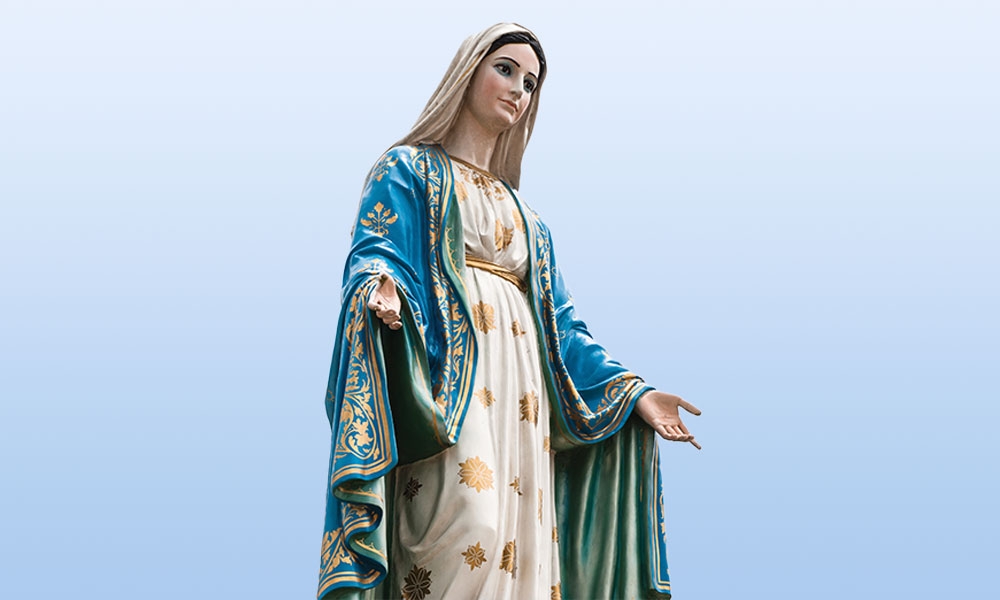
As a Mariologist and great devotee of the Blessed Virgin Mary, I initially found the doctrinal note Mater Populi Fidelis, issued on November 4, 2025, to be challenging and even frustrating. I felt it was a setback to our Catholic theological understanding of Mary’s role in the plan of salvation. However, after further reflection, research, and meditation, I have found its teachings to be enriching, timely, and appropriate. The Dicastery for the Doctrine of the Faith issued a warning that “certain expressions that could be theologically acceptable can easily become laden with concepts and symbolism that convey less acceptable notions.” (#45) The Marian titles in question were theologically acceptable in their time; however, their meaning is sometimes altered or misinterpreted. (#2) The main goal of the Dicastery was to re-establish the necessary balance that must exist between Christ as the sole Redeemer and Mediator, and Mary’s cooperation in the work of salvation. (#3) To express an accurate Christian-Catholic theological understanding, these titles — Co-Redemptrix and Mediatrix — require clarification and correction.
In 1 Timothy 2:5-6, we read: “For there is one God, and one mediator also between God and mankind, the Man Christ Jesus, who gave Himself as a ransom for all.” Christ’s sacrificial death and resurrection alone reconcile humanity with God; no other human or angel can accomplish this. Christ alone bridges the gap between God and humanity as the Mediator, fully and definitively. At the same time, the Dicastery reminds us that the uniqueness of Christ’s mediation is inclusive: “in communion with Him, we can all become, in some way, cooperators with God and ‘mediators’ for one another.” (#28) As 1 Corinthians 3:9 affirms, “For we are God’s fellow workers; you are God’s field, God’s building.”
The Blessed Virgin Mary, as the eminently blessed mother of Jesus Christ, holds a unique and supreme singular character that is distinct from all of God’s cooperators. She shares an intimate, indissoluble, and inseparable connection with her Son. “Because of this singular union in motherhood and in grace, her prayers for us have a value and an efficacy that cannot be compared to any other intercession.” (#38)
It is one thing to say that Mary is a cooperator, assistant, intercessor, and collaborator of Christ; it is another to call her a “Co-Redeemer” in a way that suggests she is equal and of the same dignity as Christ, and “Mediatrix of All Graces” as if all graces come from her and not from God. Mary’s role is participatory and subordinate to Christ, the only Redeemer. As the Dicastery so boldly puts it: “Given the necessity of explaining Mary’s subordinate role to Christ in the work of Redemption, it is always inappropriate to use the title ‘Co-Redemptrix’ to define Mary’s cooperation. This title risks obscuring Christ’s unique salvific mediation and can therefore create confusion and an imbalance in the harmony of the truths of the Christian faith, for ‘there is salvation in no one else, for there is no other name under heaven given among men by which we must be saved.’ (Acts 4:12)” (#22)
The great lesson is this: Let us properly limit the titles “Redeemer” and “Mediator,” and all their variations, to Christ alone, while reserving titles such as cooperator, assistant, and intercessor for others, with Mary holding the highest degree.
In conclusion, both the practices of prayer, fasting, and almsgiving, as well as the role of the Blessed Virgin Mary, underscore the importance of clarity in Christian theology. Just as our Lenten spiritual disciplines risk being misunderstood when detached from their original purpose, so too Marian titles must be used with precision to reflect the proper relationship between Christ and His Mother. Christ remains the sole Redeemer and Mediator, while Mary’s unique cooperation, intercession, and assistance enrich the faithful’s participation in God’s plan without equating her with Him. By maintaining this balance, we preserve the integrity of Catholic teaching, honor Mary’s singular role, and ensure that our expressions of devotion are both faithful and theologically sound.
The Very Reverend Carlos Jose Rojas, Vicar Forane of the East Pasco-Hernando Deanery, is the pastor of Saint Rita in Dade City and the spiritual director of the Marian Apostolic Movement of Schoenstatt. He holds a pontifical postgraduate certificate in Spiritual Direction and Mariology and is pursuing a Doctorate in Applied Theology at Saint Leo University.