God’s Way
Lessons from the Camino
Lessons from the Camino
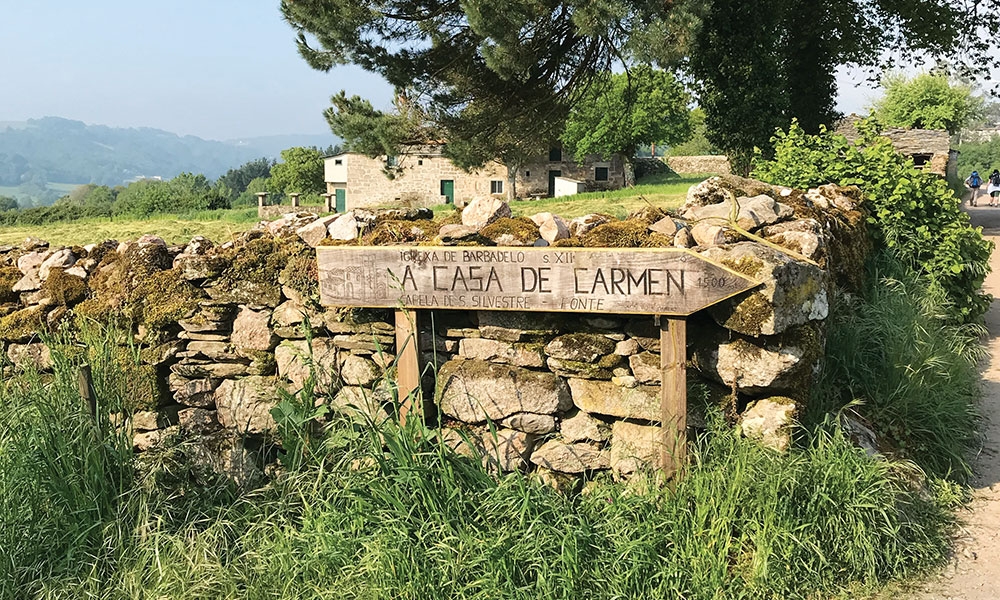
Spring in Galicia, Spain, is spectacularly vibrant. The air is cool, beginning to warm but not yet heavy. The fields are impossibly green, the sky a bright, forgiving blue, and the landscape feels alive with a sense of promise or hope. When I began walking the Camino de Santiago along the French Way, starting in Sarria, I believed I knew what I was seeking. I expected the Camino would bring me closer to God and closer to the people walking beside me: my sister, my mother, my aunt, and two family friends. I imagined shared prayers, deep conversations, and a strengthening of bonds through a sacred journey.
Spring in Galicia, Spain, is spectacularly vibrant. The air is cool, beginning to warm but not yet heavy. The fields are impossibly green, the sky a bright, forgiving blue, and the landscape feels alive with a sense of promise or hope. When I began walking the Camino de Santiago along the French Way, starting in Sarria, I believed I knew what I was seeking. I expected the Camino would bring me closer to God and closer to the people walking beside me: my sister, my mother, my aunt, and two family friends. I imagined shared prayers, deep conversations, and a strengthening of bonds through a sacred journey.
What I did not expect was that the Camino would, instead, fracture my family.
Most mornings began the same way: stiff feet meeting the floor, muscles protesting before the day even started. We would attempt to bandage our wounded feet, lace up our boots, hoist our packs, and step onto the path, sometimes before the sun had fully risen. The terrain shifted constantly. Some days brought steep inclines that seemed endless under the growing heat of the day. Blisters formed, feet ached like never before, and by evening we often staggered into town more than walked.
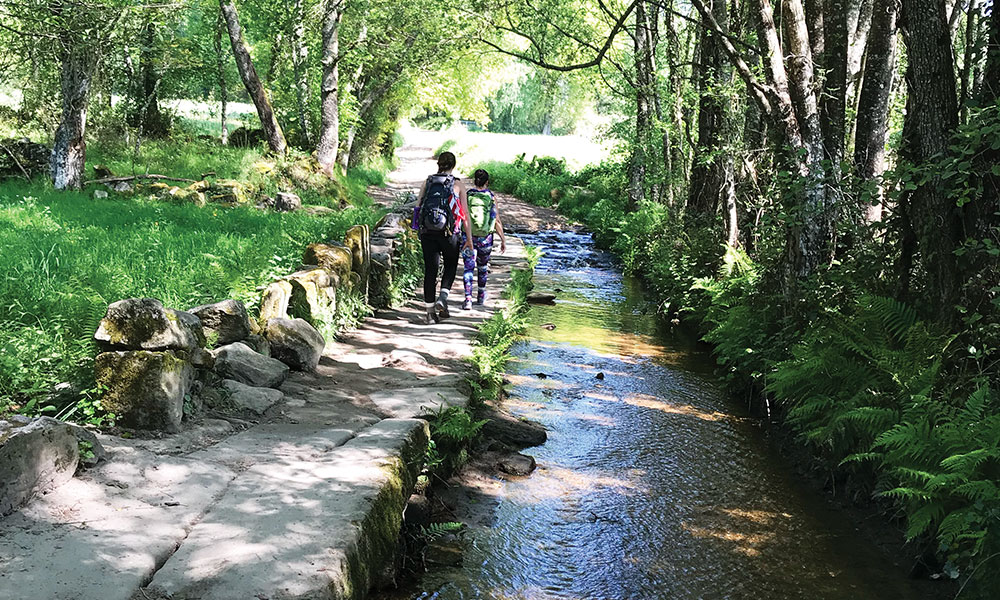
Other days, the Camino softened. The path flattened and opened into rolling farmland and gentle hillsides. We crossed bubbling streams, walked beneath arching tree canopies, and passed through small, picturesque stone towns that looked as though they had been waiting for pilgrims for centuries. Window boxes overflowed with flowers. Church bells marked the hours. The scenery was beautiful enough to momentarily distract us from the pain.
And the food — simple, hearty, and memorable — became a daily consolation. Plates of peppers blistered in olive oil, fresh seafood and meats, thick Spanish tortillas, crusty bread, and generous pours of local wine restored us each night. One evening stands out clearly even now: a small courtyard tucked into one of those stone towns, umbrellas open against the fading light. Pilgrims from around the world gathered there, glasses of wine in hand, sharing stories in broken English and half a dozen other languages. Laughter echoed off the old walls. For a moment, the Camino felt exactly as I had hoped it would.
But beneath the surface, tensions grew. The physical strain revealed emotional fault lines. Words were spoken: critical, sharp, and wounding. Old resentments surfaced.
Still, we walked on, brushing aside our grievances.
Eventually the Camino ended, as it has for countless pilgrims, at the Cathedral of Santiago de Compostela. Entering the city, we were tired but relieved, the moment carried a quiet sense of accomplishment. We stood in line to receive certificates, marking the completion of the pilgrimage and the plenary indulgence we received for walking at least 100 km. From there, we headed to the cathedral — tired, emotional, and generally quiet. At Mass, the massive botafumeiro swung high above us, incense filling the vast space with smoke, carrying the congregation’s prayers with it. From the outside, our Camino looked like a success. On the inside, the wounds were still raw.
After that final day of the walk, the physical exhaustion, unspoken frustrations, and long-simmering criticisms finally surfaced and the situation erupted. What was meant to be a journey of unity became a source of deep hurt and lasting distance. What had been held together on the road broke apart in the stillness after the walking stopped. At the time, I could not reconcile that pain with the holiness of the Camino. I left Santiago not feeling closer to God or to my family, but confused, disappointed, and brokenhearted.
It took years to begin to understand what that journey was teaching me.
Like Lent, the Camino did not explain itself in the moment. Lent, too, is a season of struggle — of fasting, sacrifice, and self-examination — where clarity often comes later, if at all. While we walk through it, we may feel only discomfort, loss, or silence. Yet God is always present on the road, even when we cannot see Him, quietly inviting us to keep moving forward, one faithful step at a time.
Looking back now, the Camino remains difficult to revisit. The pain was real, and some of the consequences linger. But so does the growth and grace that came from it. Healing did not come through sudden insight or dramatic breakthroughs but through the slow, steady work of surrender, learning to pray honestly, setting healthy boundaries, and allowing God to be the foundation of my healing. God has continued to work in my life, in His time, not mine. The Camino taught me a hard but necessary truth: Each of us is responsible for our own heart and decisions. When we are wounded by others, we cannot control their actions, but we are accountable for how we respond — with charity, humility, and honesty before God — and for the paths we choose to walk.
The Camino also taught me the discipline of daily reliance on God. Resilience was not self-sufficiency but trust, trusting that God walks beside us even when companions fail, plans collapse, or our hearts feel broken. It turns out faith is not strengthened through walks amid beautiful scenery or shared under umbrellas in a courtyard, but by perseverance when relationships fail and prayers feel unanswered.
The road to Santiago was not the journey I wanted. But, like Lent itself, it became part of the journey I needed: a pilgrimage of surrender, one that continues to unfold, step by step, toward healing, humility, and deeper trust in God who walks with us, even when the way is hard.
Try This Local “Mini-Pilgrimage”
Franciscan trail in the Diocese of Saint Petersburg
Make a half-day or full-day loop that traces the Franciscan spirit — poverty, peace, creation, and mercy — through local churches. At each stop, pause for a brief Scripture, a silent intention, and a simple work of mercy.
Suggested route (choose 3 to 5 stops)
- St. Francis of Assisi Church, Seffner
- Focus: humility and conversion of heart. Begin by asking God to deepen your faith, hope, and charity.
- Sacred Heart Church, Tampa
- Focus: the merciful love of Christ. Pray for the grace to love and serve the poor.
- St. Patrick Church, Tampa
- Focus: missionary courage. Ask for the courage to live and share your faith.
- The Franciscan Center, Tampa
- Focus: gratitude for creation. Thank God for the beauty of the world and pray for peace.
- St. Mary Our Lady of Grace Church, St. Petersburg
- Focus: mercy and service. Pray for a heart that recognizes Christ in those in need.
How to do it
- Begin with a morning offering and intention for peace in your family, parish, and city.
- At each church: read Psalm 8 or Matthew 5:1–12, then 2 minutes of silence.
- Close with the Canticle of the Creatures (select stanzas) and a concrete next step: one person to reconcile with; one habit of simplicity to adopt this week.
Creative application: If you’re organizing this for a group, assign a “pilgrim steward” for each stop to lead a three-minute reflection and a simple work of mercy (e.g., bring canned goods to one parish, write thank-you notes for clergy at another).