Getting Our Affairs in Order: An Interview with Dr. Maggie Keenan
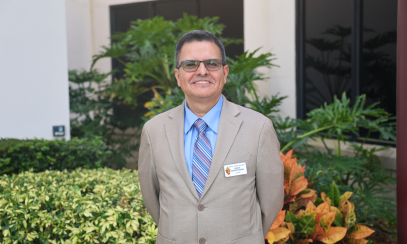
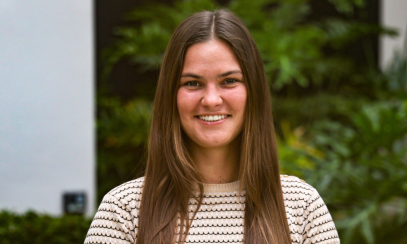
Dr. Maggie Keenan is the Executive Director of the Catholic Foundation of the Diocese of Saint Petersburg. With more than 30 years of experience in philanthropy and legacy giving, she shares how we can take the opportunity to get our affairs in order and ensure our wishes are honored by our loved ones, even after we receive our heavenly reward.
Dr. Maggie Keenan is the Executive Director of the Catholic Foundation of the Diocese of Saint Petersburg. With more than 30 years of experience in philanthropy and legacy giving, she shares how we can take the opportunity to get our affairs in order and ensure our wishes are honored by our loved ones, even after we receive our heavenly reward.
What is the purpose of the Catholic Foundation?
The Foundation is the arm for the diocese where we hold and manage different types of funds for our parishes, schools and ministries—typically, endowment funds. The idea is to steward them well so that those assets go on in perpetuity to support our entities here in the diocese.
What is an endowment?
An endowment is a fund that is managed, held and invested. It's invested following the United States Conference of Catholic Bishops' guidelines on investing, so it follows Catholic screening. But, in a nutshell, an endowment is meant to be there in perpetuity to provide an ongoing stream of income for a school or parish.
Where do I start? I have some ideas about where I want my money or the things I've collected over a lifetime to go, but I'm not sure how to do it.
Start with our place of faith. We need to really pray and discern about the decisions that we're going to make, and we want those decisions to reflect our Catholic values and our Catholic heritage. When we start from a place of faith and bring prayer to the conversations with our loved ones, and we discern about how we will distribute the assets that we have worked so hard for all of our lives, it will make that process a lot more grace-filled and not as strenuous.
Should I create a will or a trust first? Does it depend on my wealth accumulation?
Most people think having a will versus a trust actually has to do with the size of how much you have. My philosophy is, it depends on how warm, fuzzy and loving your family dynamics are. But what I mean by that is a will, the document and what your last wishes or desires are, will only kick in upon your passing. It will be of public record, and it'll have to go through probate, and a lot of family members come out of the woodwork. A trust allows you to manage your assets while you are living and upon your passing keeps your affairs private. It actually simplifies the distribution of who you said was going to get what.
My brother and I have joined my mom's trust, but she also has a will. Why do we need both? Or do we need both?
Trusts do not always provide for legal guardianship in the document, so it's important to then have both if there are dependents. For some people, they don't want to put all of their assets into a trust during their lifetime. They'll keep some of their assets, for example, a checking or savings account, outside the trust. Whatever that's not in the trust will pour over into a will. It's called a pour-over will.
What is an executor of the estate and the power of attorney?
An executor is an individual that you've actually had the conversation with and named to work with probate to distribute your assets. They work very closely with probate, and their real job is to enforce your wishes and ensure that they're carried out, as well as pay any taxes and bills. Their job kicks in upon your passing, and then their job ends when the last asset is distributed.
Powers of attorney are different. They can be the same person. You need a medical power of attorney and a financial power of attorney, and they can all three be the same person, or you can have three different people. Powers of attorney are those who are working on your behalf with either your physician and/or your finances while you're alive. Their role kicks in when you are medically declared incapacitated and no longer able to make decisions for yourself.
What is probate and why is it considered somewhat scary?
Probate is a court process, and its job is to fulfill the distribution of your assets while working with the executor. And really, I give them a thumbs up because it's a tough job, but they ensure your desires are really carried out because there's always going to be individuals or family members or long-lost cousins who will want to contest your will. Typically, they feel like they didn't get their fair share, for lack of a better expression. It's a tough role for the executor to be placed in. But know that probate's there to support that process. The longest I've ever seen is up to four years, but typically it's 18 to 24 months.
Let's say 25 years ago my dad had a will, but now he's passed and my brother and I cannot find it anywhere. We don't know what attorney he used, if he used an attorney, but we do remember seeing a will at one time. Things have changed, and his priorities changed later in life. Where do we go from here?
That is, unfortunately, a situation that is so common and it's tough. When a will cannot be found, and I have many stories that I could share that would be longer than our time together here today, the individual's estate would go through probate, but what's called intestate, meaning they died without a will. The assets are going to be distributed according to the state law, the statute in the state you live in. They're not always aligned with every family member's idea about how those assets should be divided.
My Dad wanted to give 20% of his money to the church or his university, but we don't have it written down. Is it the generosity of the survivors? Do you just have to trust that they'll do it?
Most states do not have a provision in their state law for people who die intestate for a charitable bequest. For those who have been really faithful and generous during their lifetime to their parish, to a ministries of the diocese or even their alma mater, you want to ensure, if that's what's on your heart's desire because you feel so strongly about it, that you let your family members know where your will is. That's really critical, that they don't have to go rummaging through your home to even figure out where you might have left it.
Does the will have to be notarized?
Yes.
Does the diocese handle these kinds of legal matters, like setting up a trust or estate?
The diocese does not work with individuals on their trusts, estates or will documents to get them established. The diocese's role only kicks in when they have been notified that they have been named as a beneficiary in someone's estate or trust after they've passed.
Is it necessary to contact my parish if I want to leave a gift in my will to the parish or another diocesan entity?
It's not necessary, but I would take it one step further and encourage people to do this. If you do a will and, let's say, you have adult children who are no longer practicing Catholics, they may contest that the percentage or whatever you were going to leave to your parish is something that they feel they're entitled to. I have witnessed this. So, it's always a good idea.
If I'm looking to make a gift, should it be a percentage or a flat dollar amount?
I always say it's best to not do dollar amounts in your will, because most of us will never really know what the value of our estate will be upon our passing. Using a percentage is better than doing a dollar amount for that very reason. No matter the dollar amount that's left, it can be distributed as 10%, 20%, just like that, where the dollar amount is a lot more difficult.
What's the role of the Catholic Foundation in managing assets? Does the Foundation board determine where the assets go?
For most foundations, an unrestricted endowment fund for general purposes is where a board would make a decision about how those monies or the amount of monies would be distributed to different diocesan entities. And that's typically, a grant-making program.
I have a boat and a nice truck, and I want to leave them to the Church. Can I do this?
The short answer is yes, you can. But the reality is that those types of vehicles are difficult for a parish or pastor to find a donor for, right?
There was a pastor back in Savannah, and he went deep-sea fishing with a parishioner for many, many years. The parishioner loved Father Mike and left the boat to him upon his passing, knowing that Father Mike could go out, but he never left Father Mike the truck to pull the boat.
I usually say, if you're going to leave a pastor a boat, make sure you leave them the truck to pull it so they can enjoy it. But the best thing to do in that type of situation is don't leave your things to a parish or an entity of the diocese. Perhaps the net proceeds of the sale of the boat would be better utilized by the parishes.
Is it the same with property and housing?
Absolutely. I have seen this in other dioceses where I have worked, and it is always best to leave the net proceeds of the sale of the home because I often say, and not to be flippant, but that our pastors are not real estate agents, right? And that's what it comes down to. The parish now has to pay the utilities for that home. They cannot shut them off. They have to send somebody over to mow the lawn to keep it looking nice for the rest of the neighborhood. So, it can be a real challenge for a parish to inherit a piece of property like that.
What about a parcel of land?
Same thing. It's like finding the right owner. Maybe there's a lot of timberland on it. Maybe it's zoned commercial. Maybe it's zoned agriculture. Finding buyers can take a few years.
How do I guarantee that my money or my assets are going where I want them to go?
I always say that there's really no guarantee, but the best way to ensure it is that you get an updated will, get it notarized, let your people know where your will is, and maybe even provide a copy of it to the parish so they know what to be expecting upon your passing, your last gift of faith, right? It doesn't hurt to let them know that.
If I want to leave something for the Diocese of Saint Petersburg, who do I call?
If you have an attorney, it's always best to let them know. If you're just unsure, you're thinking about it, or you want to know how to get started, we provide that consultation at no charge to help talk through it. But the recommendation would be then for you to decide how you want to do that and what that looks like.
This interview was recorded for Spirit FM’s public affairs program, “How We See It,” hosted by John Morris.
The Catholic Foundation is committed to helping you make informed, faith-filled decisions that reflect your values and your desire to make a lasting impact.
Whether you’re beginning to explore creating a will, planning your estate, or looking for ways to support your parish or a Catholic ministry, we’re here to answer your questions and guide you through the process.
We are excited to hear from you and look forward to serving you!
Contact the Catholic Foundation at contact@catholicfoundation.org.